Reflexology FAQs, With Blossom
How does reflexology work?
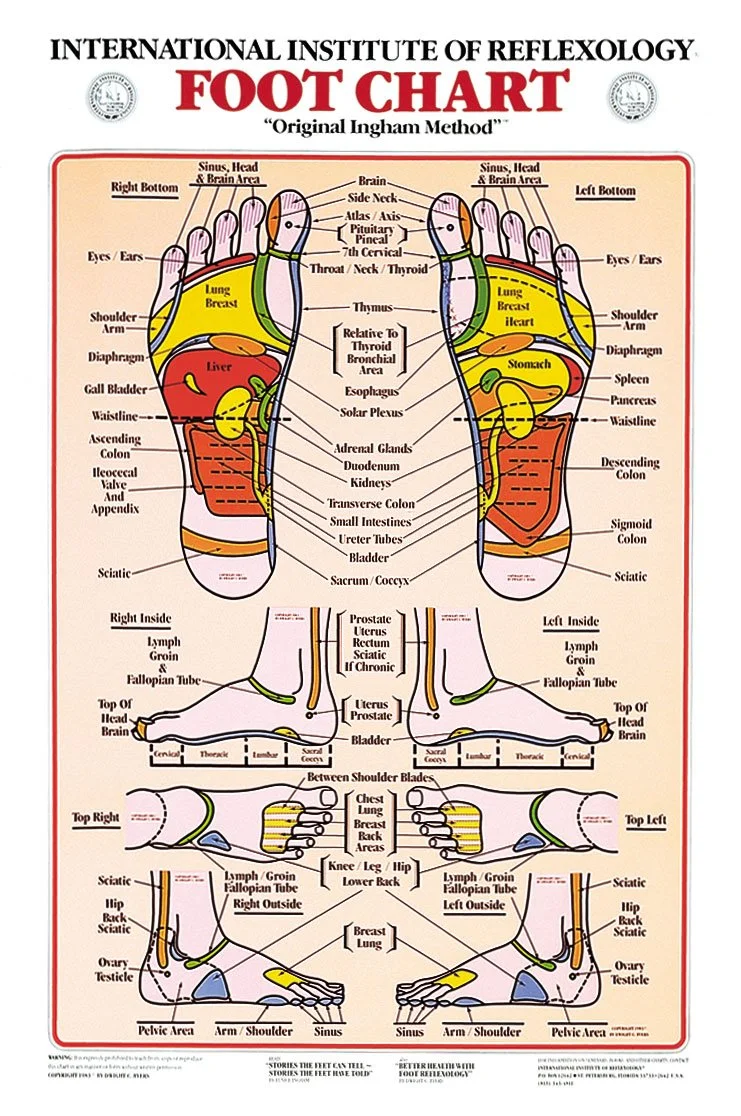
Reflexology works by bringing the body back into a more balanced state, through the energy pathways of the body. The whole body is reflected in the feet, and applying pressure to specific points can help clear areas of blocked energy. This can show up in the body as digestive issues, hormonal imbalances, headaches and more.
Reflexology can also be done on the hands, face and ears, but Blossom always works on the feet.
What's the difference between a foot massage and reflexology?
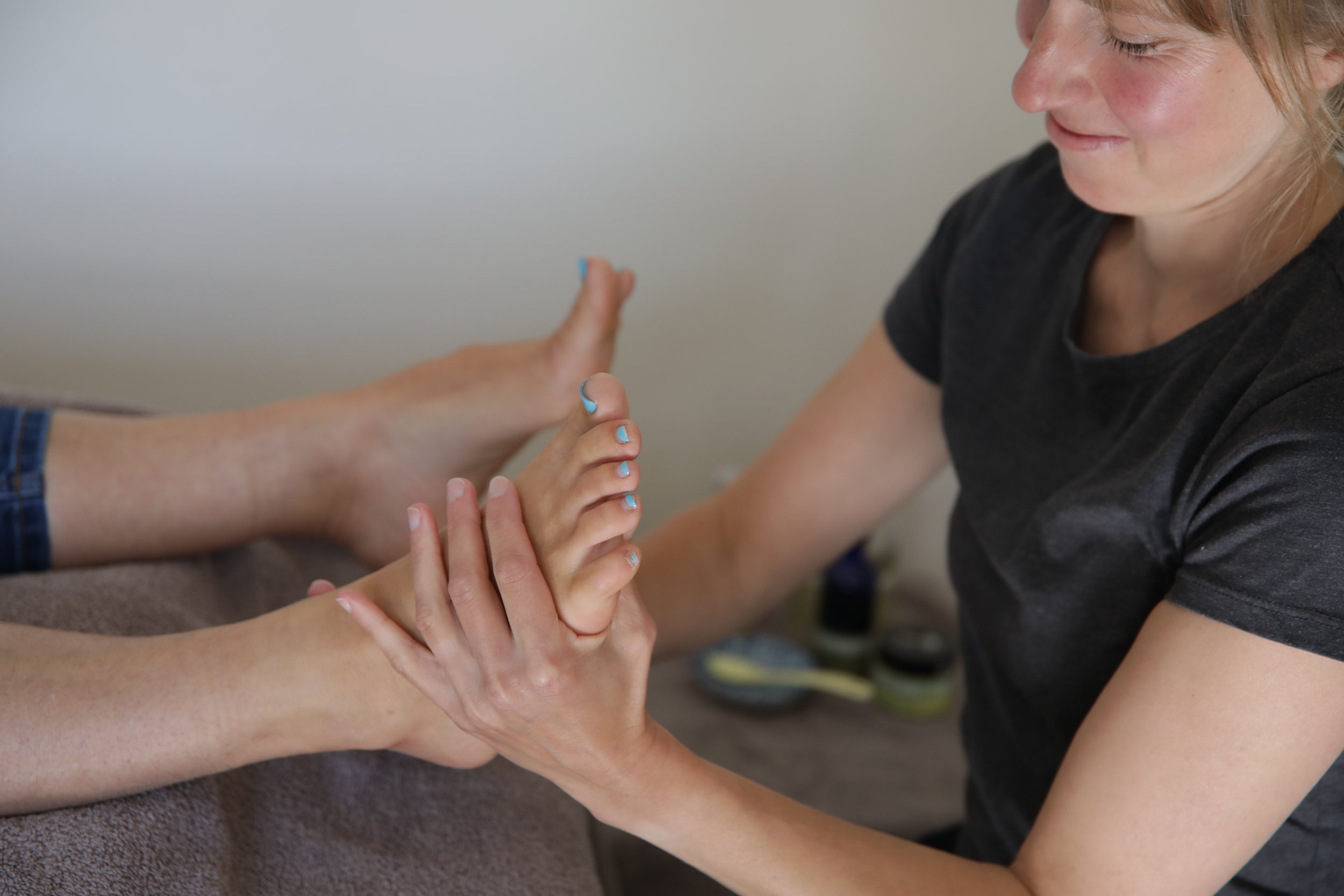
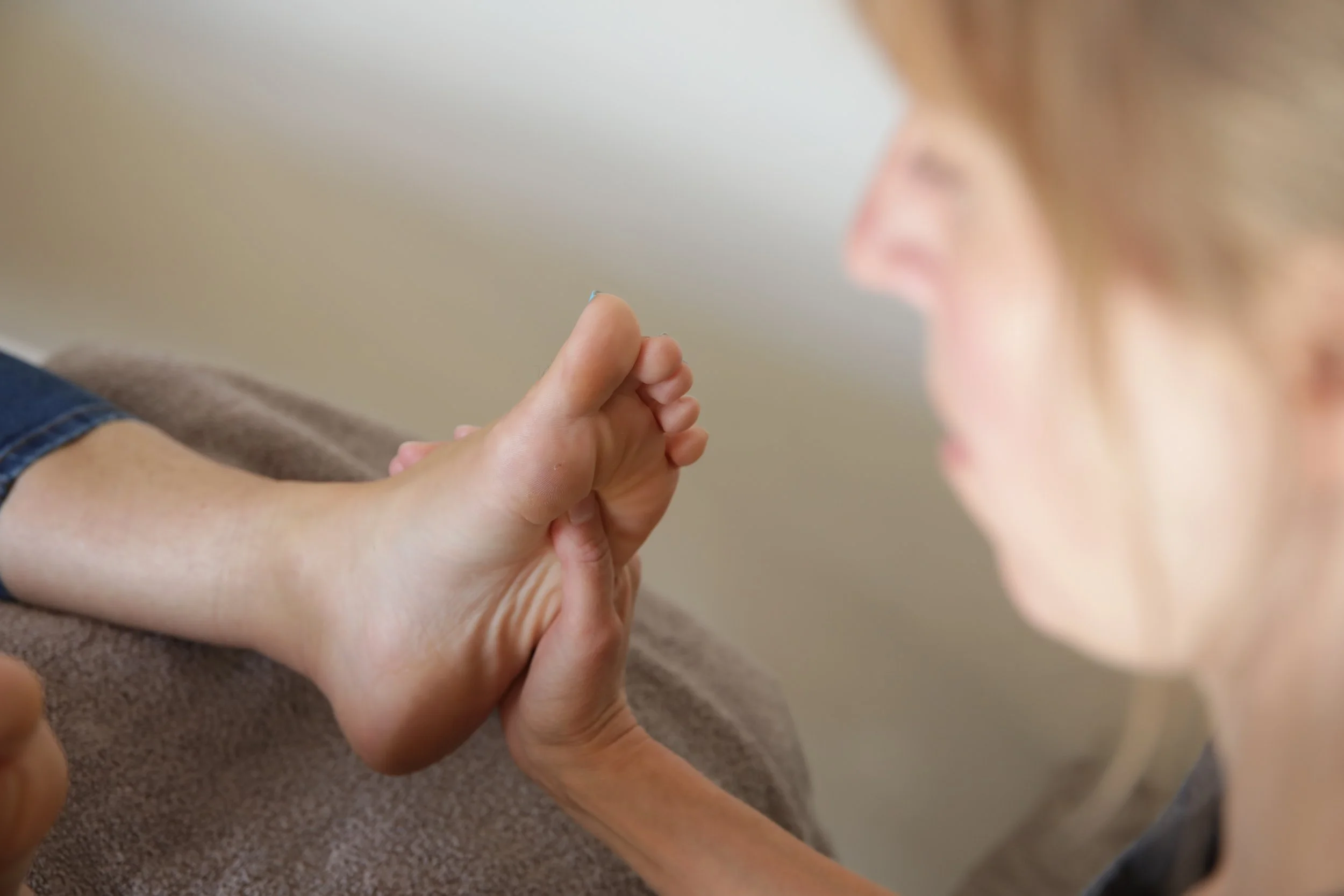
Blossom starts every session with some massage to relax the feet and lower legs. From there, she applies pressure to specific reflex points, which may feel tender or sensitive. Some points are held until the tenderness eases, and some are worked on both feet at once to bring the body into balance.
What can reflexology help with?
Reflexologists can't diagnose or make claims, but many people find treatments help with:
Rest and relaxation
Better sleep
Physical pain and discomfort
Releasing tension
Support through times of change
Easing anxiety and lifting mood
A general sense of calm
A lot of physical symptoms are the body's reaction to stress, and rest is a powerful healer. Getting to a point of deep relaxation can help with all sorts, across the whole body.
What does an appointment look like?
Your first appointment starts with a consultation, so Blossom can check reflexology is right for you and plan the treatment. You'll take your shoes off and get comfortable on the couch with pillows, blankets and bolsters.
The treatment starts like a foot massage, then moves into work on specific points around the feet and ankles. You're welcome to chat and give feedback along the way, or switch off completely and let yourself relax. At the end, you'll have a chance to talk through how you felt and anything that came up.
How might it help my mental wellbeing?
Reflexology is brilliant for grounding and resetting the nervous system. Working on the feet draws energy down through the body, which helps quieten a busy mind. With so many nerve endings in our feet, it's no wonder it's so relaxing. Many people leave feeling a real sense of clarity.
Who is reflexology good for?
Honestly, everyone. Blossom has treated babies, children, and clients in their 90s. A lot of people first try reflexology during pregnancy, often on a recommendation, as it's known for helping ease anxiety around birth and supporting sleep.
In some cases it may not be suitable, so if you're ever unsure, you're welcome to call Blossom for a chat before booking.
How might I feel during a treatment?
Many people describe a dream like state, deeply relaxed while still aware of what's happening in their feet and body. It's common to feel warmth or tingling, and sometimes you might even feel the part of the body connected to that reflex point responding.
How might I feel after a treatment?
You might feel thirsty afterwards, so drink plenty of water and rest where you can. This helps the treatment properly settle in the body.
If it's your first session, you may go through a bit of a healing process, sometimes cold like symptoms or a headache. Proper rest and hydration usually helps avoid this.
Some people feel energised at first, then have a really deep sleep later that day. For others, treatment can bring up emotion, which is simply a shift in energy and a positive step towards clearing blockages in the body.
If you enjoy your first treatment, a series of sessions can help build on that.