
What exercise is safe in pregnancy?
Author: HCPC, CSP, POGP Pelvic Physiotherapist Sarah Lawrence
Did you exercise before becoming pregnant? Or maybe you’re thinking about starting exercise during pregnancy but aren’t sure what the guidance actually is? You’re not alone. There’s a lot of conflicting advice out there, and it can be confusing to know what’s safe and what isn’t. Unfortunately, what often happens is that some people stop exercising altogether.
The good news is that we now have much stronger, evidence-based guidance around exercise in pregnancy, and it’s been a game-changer. We can be far more confident in encouraging safe movement and exercise throughout pregnancy. Gone are the days when well-meaning friends, family members, or even professionals advised women to stop running or drop to very light weights as soon as they became pregnant, provided there’s no medical reason to do so.
Let’s talk about what the evidence actually tells us….
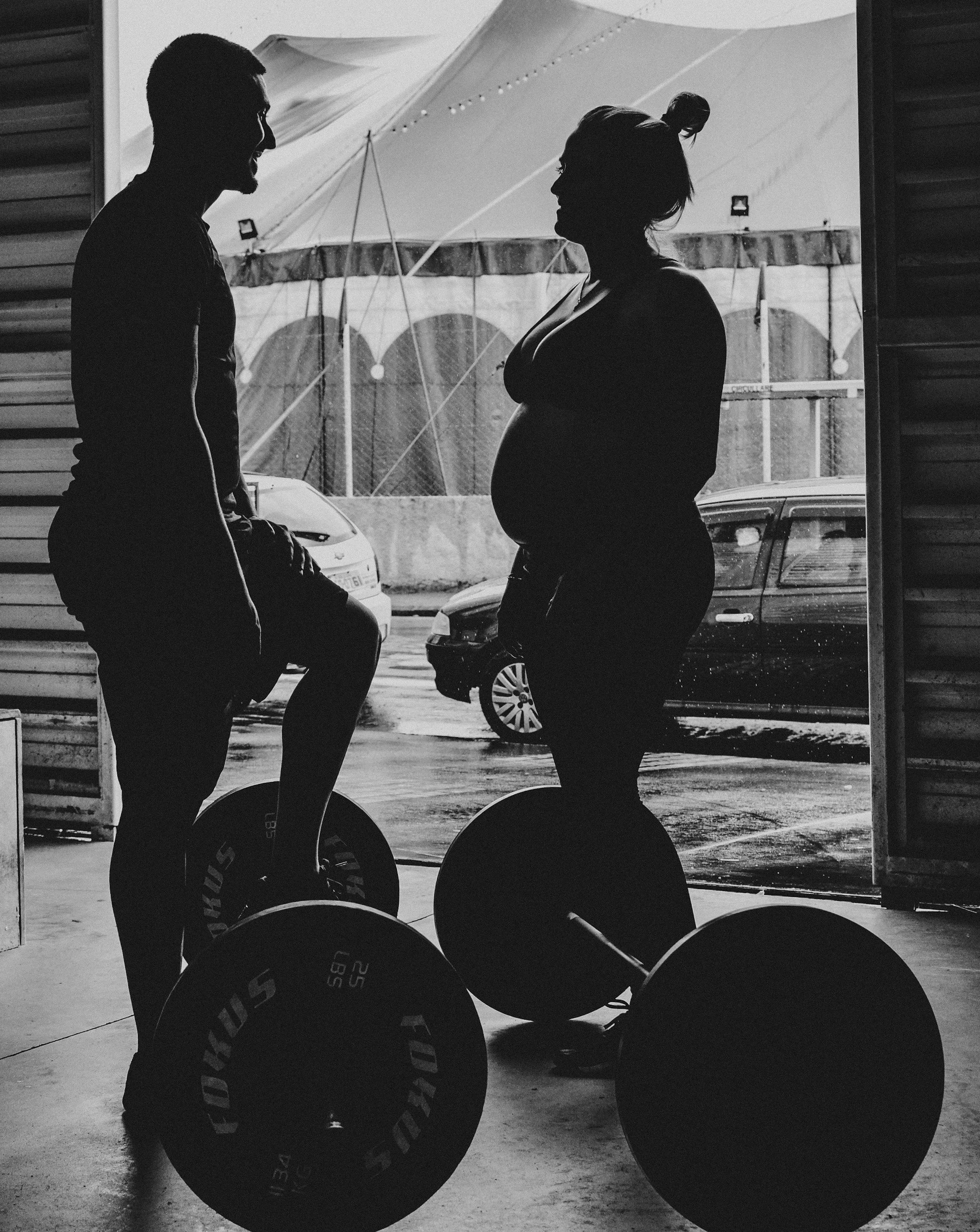
“We can be far more confident in encouraging safe movement and exercise throughout pregnancy.” - Sarah
Benefits of exercise in pregnancy
Exercise during pregnancy has many benefits for both mum and baby. Research shows that people who exercise during pregnancy have a reduced risk of:
Gestational diabetes
Gestational hypertension (high blood pressure)
Pre-eclampsia
Depression
Macrosomia (baby weighing over 4 kg)
Importantly, research also shows that exercise in pregnancy does not increase the risk of:
Miscarriage
Preterm birth
Complications for the baby
Starting exercise in pregnancy
You can begin exercising during pregnancy even if you haven’t exercised before. The key is to start gently and choose something you enjoy, because you’re much more likely to stick with it. Build up gradually and give your body time to adapt.
There are no hard and fast rules
We also now know that there’s no one-size-fits-all approach. Every body is different, and what feels “heavy” or challenging will vary from person to person. There’s no strict limit on how much weight you can lift, and you don’t automatically need to scale every movement just because you’re pregnant as long as it feels okay.
That’s the most important question to keep asking yourself: How does this feel?
You may find that you need more recovery time, especially as pregnancy progresses, and it’s completely okay to slow down when your body asks for it.
Signs you may need to modify your exercise
You may need to adjust the weight, position, speed, intensity, or even the type of exercise if you notice any of the following:
Leaking from the bladder or bowels
A sensation of vaginal heaviness or bulging
Pain in or around the pelvis or vagina
Loss of form or control, particularly through the abdomen
Feeling completely “wiped out” afterwards or for several days following exercise
These signs can be subtle at first, but they’re your body’s way of letting you know it’s starting to struggle. Pushing through without appropriate guidance isn’t helpful and may increase the risk of symptoms worsening.
Exercise, miscarriage, and IVF pregnancies
There is no evidence to suggest that exercise increases the risk of miscarriage or reduces the success of an IVF pregnancy. A recent paper by Prevett and Davenport (2026) reported that women who continued lifting heavy weights in the first trimester did not experience higher rates of fetal loss. This suggests that women can continue lifting heavier loads during early pregnancy if there are no medical contraindications.
For IVF pregnancies, medical teams may recommend lower-intensity exercise in the first two weeks following embryo implantation. If you’re unsure, or have specific concerns, it’s always best to consult your medical team.
Exercising while lying on your back
New evidence also suggests that exercises performed lying on your back, such as bridges or bench press, can be continued during pregnancy, provided you do not experience breathlessness, dizziness, or nausea in this position (Dalhaug et al., 2025). These symptoms may indicate compression of blood vessels in the lower back.
Precautions for exercising on your back may include:
Any cardiovascular or respiratory conditions
High BMI (body mass index)
Twin (or higher-order) pregnancy
Concerns regarding the baby’s growth or movements
Short periods of exercise in this position are considered safe when there are no risk factors present.
Strength training and HIIT in pregnancy
To recap: strength training and HIIT-style exercise are safe during pregnancy and are generally well tolerated by both mum and baby, as long as:
The exercise feels okay
There are no pregnancy related contraindications (medical risks)
You maintain good control and technique throughout movements
If you’re ever unsure, speak with your medical team to get individualised advice.
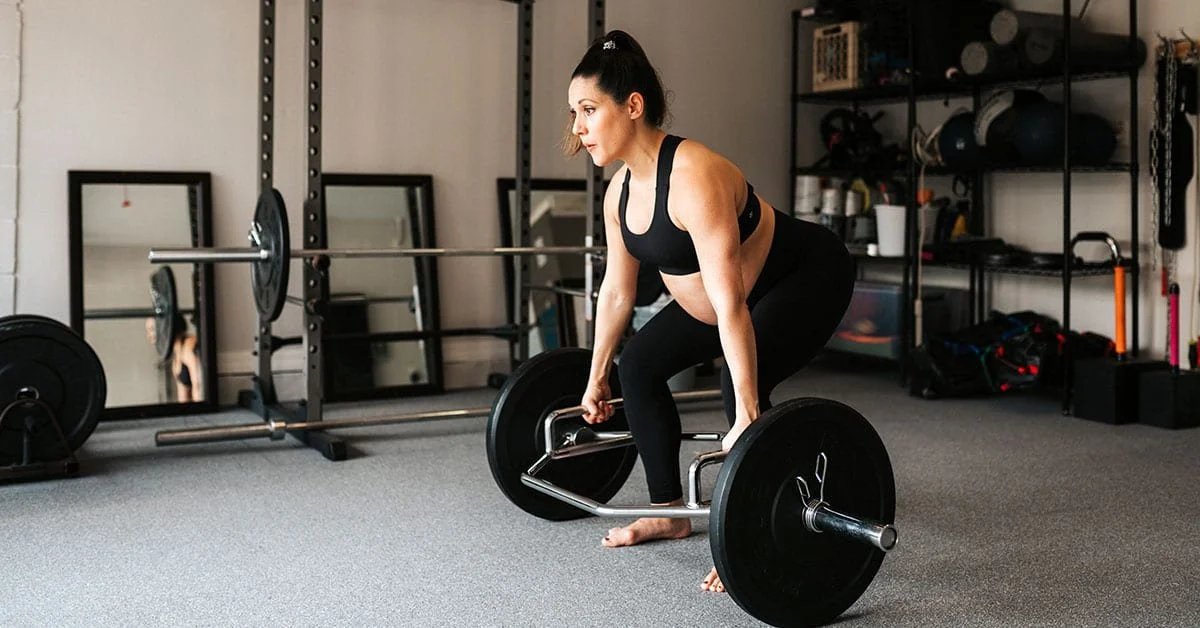
Image: Pregnant woman lifting weights
Exercises to avoid in pregnancy
The following activities are not recommended during pregnancy:
Exercises with a high risk of falling or ‘bumping the bump’
Scuba diving (due to decompression risks for the baby)
Uncontrolled contact sports
Shifting your training focus
Your training goals during pregnancy will naturally look different from before. This isn’t the time to chase personal bests. Instead, the focus is on supporting your body through the physical demands of pregnancy, preparing for birth, and setting strong foundations for postnatal recovery.
A pelvic health physiotherapy assessment at any point between 12 and 36 weeks of pregnancy can be extremely valuable. It can help you understand how your pelvic floor and abdominal muscles are functioning both at rest and under load, support your training choices, and increase your confidence in exercising safely throughout pregnancy.

Sarah is a highly experienced pelvic physiotherapist based at Alma Physiotherapy on Thursday afternoons.
HCPC, POGP & CSP Registered
Click the button below to book an appointment or FREE 10 minute discovery call.
Email pa@almaphysiotherapy.co.uk or Whatsapp Kirsty to help you book in +447942 494506