
Your C-Section Scar Still Pulling? Scar Therapy and Lymphatouch Explained
C-Section Scar Therapy in Bristol: Why It Gets Missed and What Lymphatouch Can Do
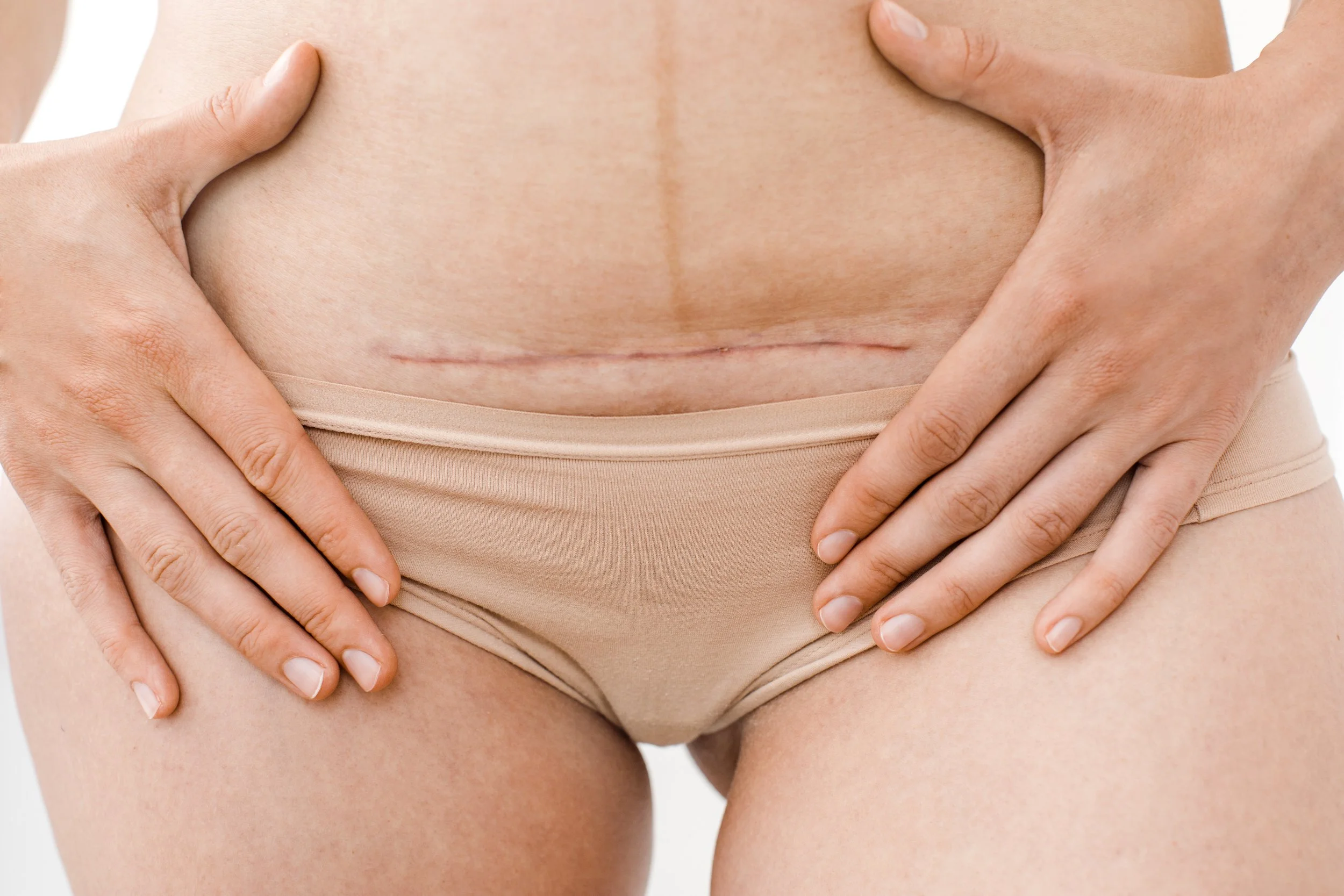
Your six-week check is done and you've been told everything looks fine. Then a few months on, you're lifting the car seat out of the boot and feel a pull right across your c-section scar. Or you run your hand over the skin above it and find a patch that doesn't feel like yours.
If that's you, we hear you. It's something we come across in clinic a lot, because the check-ups most of us get look at whether the wound has healed on the surface. They don't usually look at how the scar and the tissue around it are moving and coping with the things you want to do.
That's where scar therapy comes in. At Alma, our scar therapist Stella uses a treatment called Lymphatouch as part of that work. We'll walk you through what scar therapy is, where Lymphatouch fits, and how to book in a way that suits your own healing timeline. Pop the baby in the pram and read on, we're pram and breastfeeding friendly for a reason.
Your scar needs its own check
Scar therapy is hands-on care for your c-section scar and the tissue around it. It can look at tightness, pulling, numb patches and sensitivity, and it helps you understand why you're experiencing them. The focus is how your body feels and moves day to day.
A c-section is major abdominal surgery. But once the wound has closed, everyone's attention drifts to the baby, the feeds and whether anyone has slept. Nobody asks about the scar again, so you stop mentioning it.
The six-week check looks elsewhere
The postnatal check with your GP usually looks at your general health and how you're recovering overall. It doesn't normally include a hands-on look at your scar or the tissue around it, and it doesn't come with a plan for getting back to exercise.
GPs are doing a different job in that appointment, so lots of mums assume it covered everything. Then they find out months later that nobody actually checked the scar.
Mentioned right at the end
When we hear this in clinic, it often goes the same way. Someone comes in for something else, maybe getting back to running or a sore back, and says right at the end, "Oh, and my scar still feels a bit odd." She laughs it off as if it's too small to bother us with.
It's absolutely something we can help with. If your body feels different around your scar, that's reason enough to ask.
What months later can feel like

Everyone heals differently, so there's no single picture. But think of a mum eight months after her c-section who reaches up for something on a high shelf and feels a pull right across her scar. She touches the skin above it and finds patches that are still numb. That's the kind of thing we hear about in clinic.
Other mums tell us about a waistband that rubs, or a tummy that feels tight and stiff when they try to get moving again. These things are common, and common doesn't mean you have to put up with them.
We can't tell you what's going on in your body from a blog post. A scar that has changed suddenly, or looks red, hot or sore, should be checked by your GP or midwife. If it's just that your body feels different, an assessment is the place to start.
Where Lymphatouch fits in
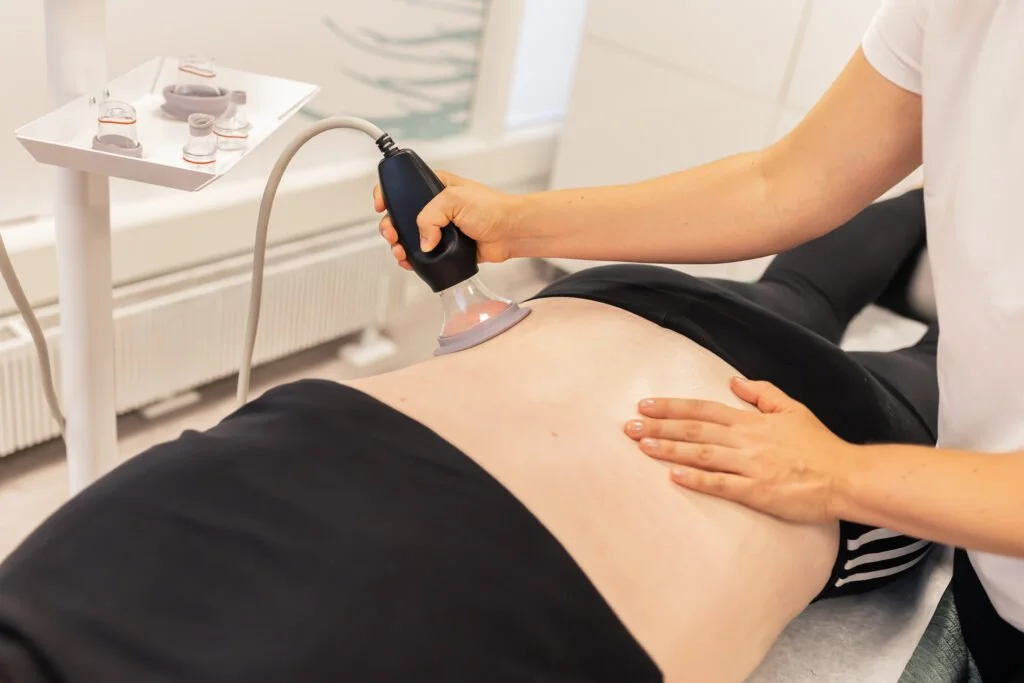
Scar therapy at Alma is tailored to you, and Lymphatouch is one of the tools our scar therapist Stella can use. She uses it when it makes sense for you, alongside a proper assessment.
What it is, simply
Lymphatouch is a treatment that works with your lymphatic system, the body's drainage network for fluid. After surgery, tissue can feel heavy or tight, and supporting that drainage can be a helpful part of recovery.
Whether it suits you depends on your scar, your healing and what you want to get back to. Stella works that out with you in the room.
Your session with Stella
Like everything at Alma, it starts with understanding why you're experiencing your symptoms. Stella will chat through what you've noticed, look at your scar and the area around it, and put together a plan that fits where you are.
It all happens in our welcoming, cosy space, and you can bring your baby. If they need a feed or drop off to sleep halfway through, that's completely fine. One of our clients described the atmosphere as welcoming and calm, which is exactly what we hope you'll feel when you walk in.
Back to what you love
After a c-section you'll probably hear "take it easy, be careful, don't push anything." Rest matters early on. But the body also needs load and challenge, built up gradually, to restore function. Real life brings car seats, prams and toddlers on hips long before it brings a 5k.
If the tissue around your scar feels tight or stuck, it could be one of the things standing between you and moving the way you want to. Looking after it as part of your return to running or strength training gives your body a better chance of feeling like yours again.
This year we've had over 2000 appointments at Alma, with thousands of new mums and mums to be, and hundreds of Alma babies. Plenty of those mums came in for one thing and found out we could help with more.
Four questions for you
You don't need to be a scar expert to know if it's worth a chat. Have a think about these:
- Does your scar pull or catch when you reach, stretch or get out of bed?
- Are there patches of skin above or around it that feel numb or oddly sensitive?
- Do you avoid certain movements or exercise because of how the area feels?
- Have you been told everything is healed, but your body still feels different?
If you said yes to any of them, that's a good enough reason to book.
It's not too late
Lots of people assume the window has closed once their baby isn't a newborn. We see people at every stage after birth, and understanding why symptoms are happening can be worthwhile at any point. Whether your baby is eight months old or your youngest has just started school, it's still worth asking.
Not sure if your symptoms count? You can book a free 10 minute call with one of our physios. It's the easiest way to find out whether scar therapy or a wider assessment is the right next step.
How to book?
There are two easy ways in. If it's just the scar you'd like looked at, you can book with Stella directly. If you'd like the fuller picture of your recovery, the Mummy MOT+ package pairs the Mummy MOT with scar therapy and gives you a discount on both.
The best thing to do is have the Mummy MOT physio session first, around 6 weeks postnatal. If you choose the package, you then have 1 year to use your scar therapy credit, at a time that suits your own healing. No rush at all.
If you book online, an automated £20 deposit is taken and refunded when you attend. You can also book by text or email if that's easier.
Picture an ordinary Monday a few weeks from now. You reach for the top shelf, lift the car seat out of the boot and carry the baby upstairs, and your scar doesn't cross your mind once.
If you're ready, you can book with our scar therapist Stella here: https://www.almaphysiotherapy.co.uk/stella-azzurra. Or to save on scar therapy and physio together, have a look at the Mummy MOT+ package here: https://www.almaphysiotherapy.co.uk/ourpackages. Still wondering if it's for you? A free 10 minute call with one of our physios is always there.
The Alma Team x
Keywords: c-section scar therapy Lymphatouch c-section recovery Bristol scar tightness after c-section Mummy MOT+