
C-Section Scar Recovery: What No One Tells You (And How to Heal Properly)
A caesarean section is often described as a routine procedure.
But in reality, it is major abdominal surgery — and recovery involves far more than waiting 6 weeks.
If you’ve had a C-section and are experiencing tightness, numbness, a “shelf”, or difficulty returning to exercise, you’re not alone.
And importantly — this is something you can improve.
Image: parent and baby
What happens to your body during a C-section?
A caesarean birth involves multiple layers of tissue, including:
Skin
Fat
Fascia
Abdominal muscles (separated, not cut)
Uterus
Each layer heals differently, which is why C-section scar recovery is about more than just how the scar looks.
Without proper rehabilitation, it can affect how your whole body moves and functions.
Common C-section scar symptoms (that are often ignored)
Many women are told that their scar will “settle with time”.
But ongoing symptoms are common, including:
Tightness or pulling around the scar
Numbness or altered sensation
A “C-section shelf” or overhang
Pain during movement or exercise
Weakness or lack of core connection
These symptoms are common — but not something you have to put up with.
Why C-section scar massage and rehabilitation matters
Scar tissue forms as part of healing.
But without guidance, it can become:
Restricted – limiting movement between tissues
Adherent – sticking to deeper layers
Sensitive or numb – due to nerve involvement
This can impact:
Core strength and abdominal function
Pelvic floor coordination
Posture and breathing
Return to running and high-impact exercise
C-section scar massage and physiotherapy can help restore movement, reduce discomfort, and support long-term recovery.
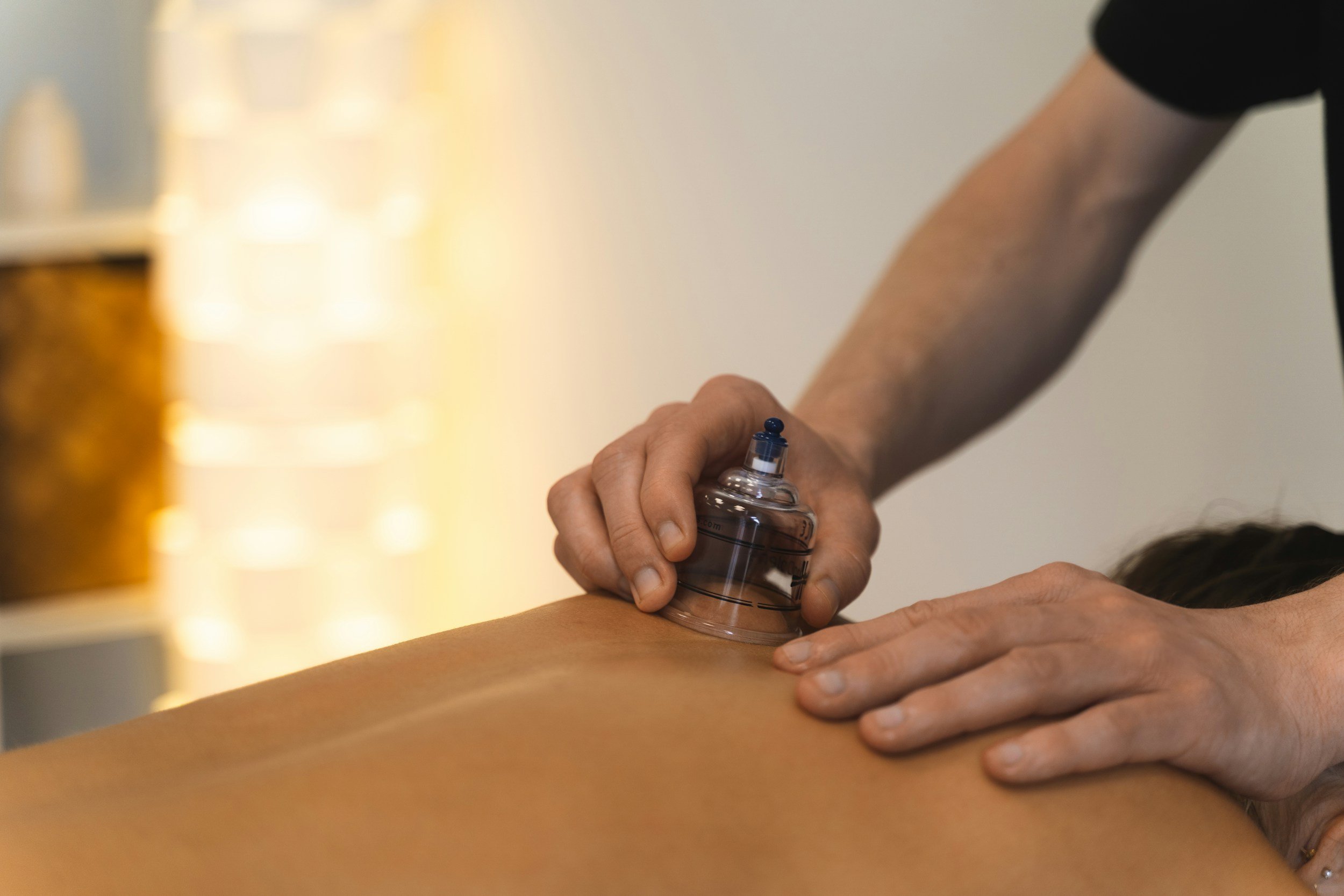
Image: cupping technique to release fascia
When can you start C-section scar massage?
Once your wound is fully healed (usually around 6–8 weeks postpartum), you can begin gentle scar work.
This may include:
C-section scar massage techniques
Desensitisation work
Mobility and movement exercises
Breathing and deep core retraining
For many women, this is enough to get things moving.
But if your scar feels particularly tight, raised, or uncomfortable — you may benefit from more targeted treatment.
When you might need more than massage
If your scar feels:
Tight or “stuck”
Painful or sensitive
Numb or disconnected
Unchanged months (or years) later
It may need more specialised input.
At Alma Physiotherapy, our scar specialist Amy offers dedicated C-section scar treatment sessions, including the use of Lymphatouch.
This advanced therapy uses gentle negative pressure to:
Lift and mobilise scar tissue
Improve movement between tissue layers
Increase circulation and lymphatic flow
Reduce tightness and sensitivity
It allows us to work more deeply and comfortably — particularly where there are adhesions or longer-term restrictions.
What is a “C-section shelf” — and can you improve it?
The “C-section shelf” is a common concern.
It’s often assumed to be related to fat or weight — but that’s not the full picture.
It’s usually influenced by:
Scar tightness and restriction
Tissue movement underneath the scar
Abdominal wall function
Pressure management and posture
This is why a combination of hands-on treatment, scar therapy, and rehabilitation can make a real difference.
Exercise after a C-section: how to return safely
Returning to exercise after a C-section isn’t about rushing back.
It’s about building a strong foundation.
A safe return to exercise focuses on:
Breathing and diaphragm function
Deep core and pelvic floor coordination
Gradual loading and strength work
Progression to impact (running, jumping)
Skipping this stage can lead to:
Pelvic floor symptoms
Abdominal discomfort or doming
Ongoing weakness or compensation
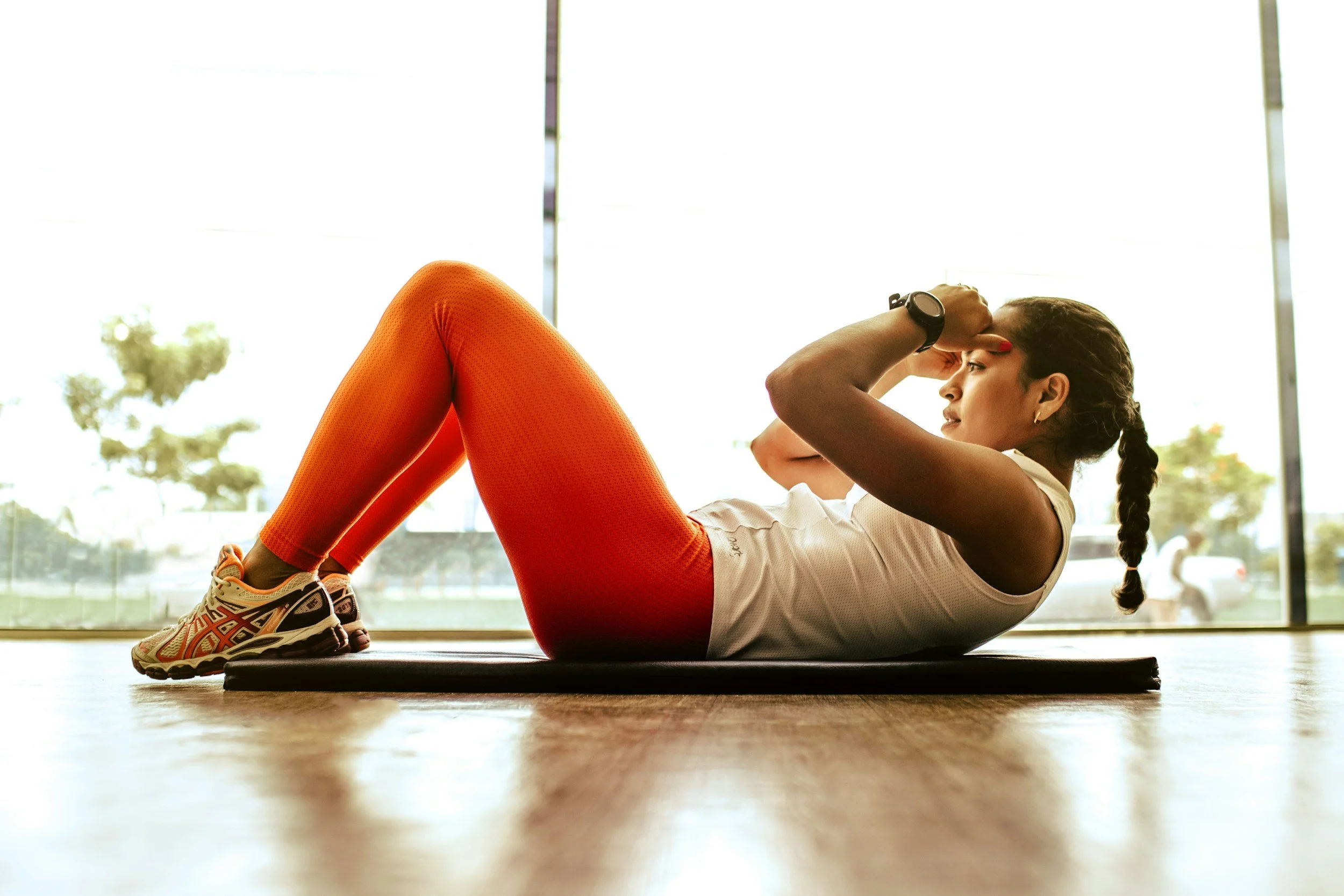
Image: woman exercising
Is it too late to treat a C-section scar?
“Is it too late?” is one of the most common questions we hear.
It’s not.
We regularly work with women:
Months postpartum
Years postpartum
Even decades after their C-section
And still achieve meaningful improvements — especially when combining hands-on treatment with targeted rehab.
Where should you start?
If you’re unsure what your body needs, this is the most helpful place to begin.
At Alma Physiotherapy, our Mummy MOT+ (£160) includes:
A full postnatal physiotherapy assessment
Pelvic floor and core evaluation
Movement and return-to-exercise guidance
One C-section scar therapy session (with Lymphatouch, if appropriate)
This allows us to look at the whole picture — not just your scar, but how your body is functioning after birth.
When should you seek support?
You may benefit from C-section scar therapy or postnatal physiotherapy if you have:
Pain, tightness, or sensitivity around your scar
A visible shelf or pulling sensation
Difficulty engaging your core
Ongoing pelvic floor symptoms
Concerns returning to exercise
C-section recovery support in Bristol
At Alma Physiotherapy, we offer specialist postnatal care including:
C-section scar assessment and treatment
Lymphatouch scar therapy with Amy
Postnatal core rehabilitation
Pelvic health physiotherapy
Return to running and sport support
We take a whole-body approach — because your recovery is about more than just your scar.
Book your C-section scar assessment or postnatal check with one of our physios
You don’t need to “just live with it”.
Start with a Mummy MOT+ or book a scar therapy session with Amy and one of our physios via our website.
Want to know more? Message pa@almaphysiotherapy.co.uk, or send us a Whatsapp on +44 7942 494506.